
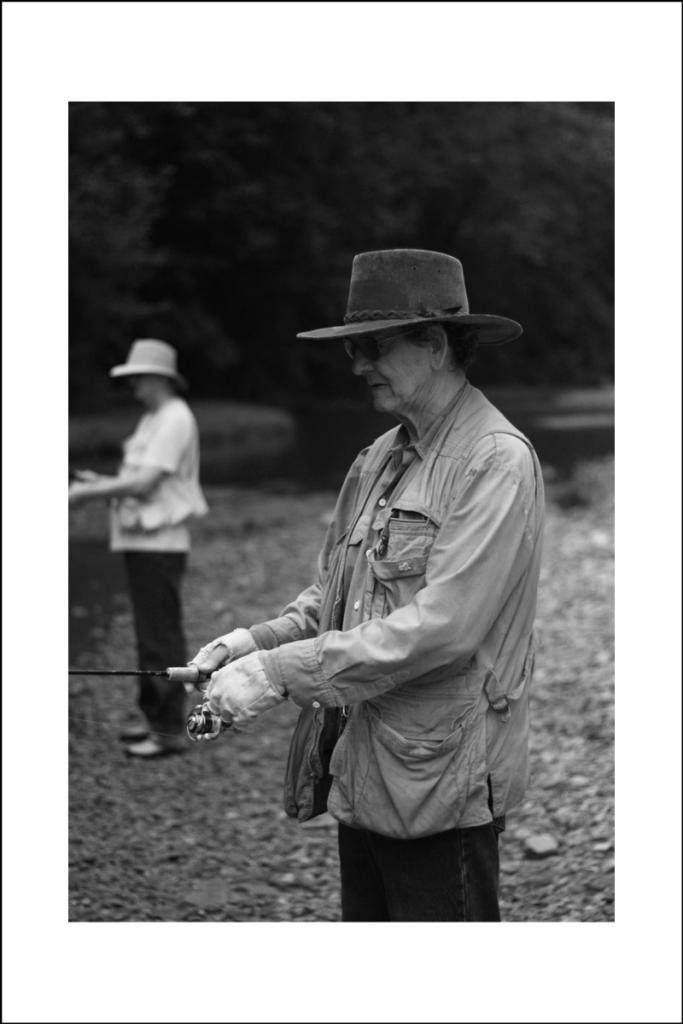
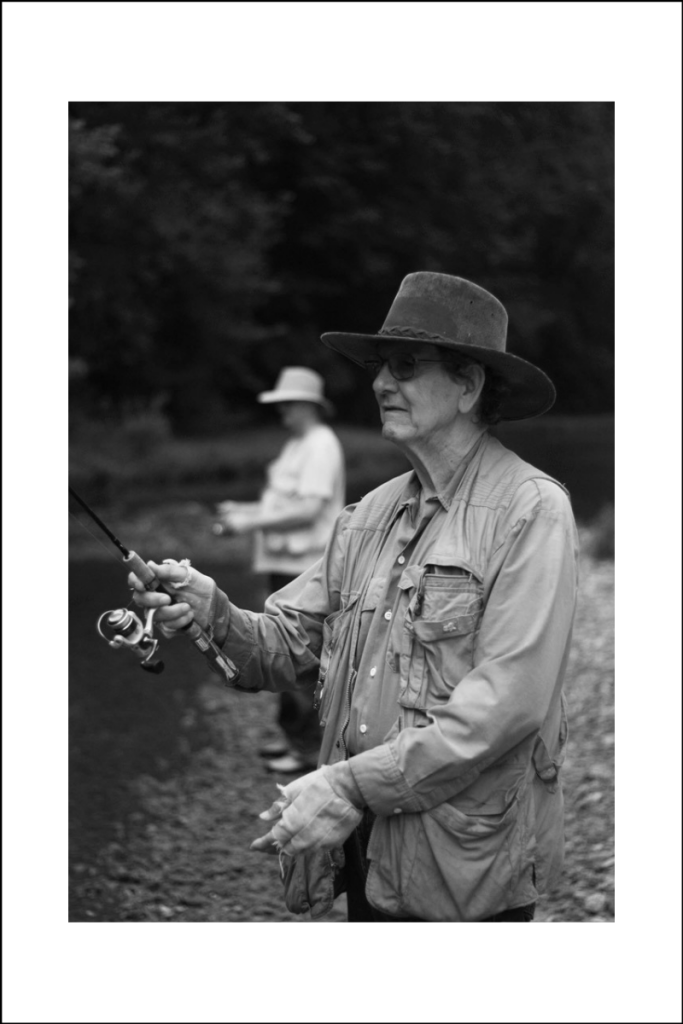
In Memory of Ronald Grant Durso: August 28, 1934-August 26, 2019

“Life is 10% what happens to you, and 90% how you respond to it.”
I no longer remember the details of the circumstances surrounding why Papa said that to me. At 13 years of age, or maybe 14, I’m certain there was some kind of insignificant adolescent conundrum he was trying to help me wade through. Was it a girl? Or my parents? Time has taken that one.
But what if forgetting the details is not a bad thing? Maybe if I remembered it would lessen the value of the lesson…the point of the exercise as it turned out was a brush with wisdom, problem-solving on a larger scale than my particular problem of the day.
The significance of the context expired the moment the words were spoken…because as it tends to happen, especially with especially wise people…truth distills and remains long after the details of the circumstances evaporate from memory. It is on us to bottle it, savor it, and share it.
When you get a hold of a bottle of something truly special, the last thing you want to do is drink it all yourself. As the quality or value of the contents increases, an interesting phenomenon takes place. The more prized the possession, the more joy comes from sharing than partaking. If it’s cheap hooch, no one cares you have it, not even the liquor store guy. But if you have a gold medal vintage, such as Papa’s own Durso Hills 2004 Norton, you don’t enjoy it and share it. You enjoy it by sharing it.
That is how we make the best use of truth. We partake, but we share it so that others can partake as well. Truth was always meant to be shared. It’s part of how truth is accepted and believed. We don’t ingest it for our benefit only; we take time to share and savor truth with others for collective benefit. Just as with wealth, if we act as reservoirs rather than channels, we defy its intended purpose.
The truth in this story, the 10% and 90% philosophy, is something that I believe, that I aspire to, and what I hope to pass along to my children. Because in it is a deeply profound secret of living an effective life. It’s not magic, and it won’t solve all your problems, but it helps illuminate the right decision in dealing with your problems. Papa used to say that “Every job is easy if you have the right tool,” and this truth is a tool for navigating life’s difficulties.
So, what is this truth to be savored and shared, the 10% and 90% philosophy?
Those who know me know I have spent a lot of time studying and thinking about communication. How and why and which words work consumes a lot of my mental energy. So why did Papa’s words work? Why did they lodge in my brain and effect my approach to life?
Why did I buy it? Why did I accept this truth?
It’s a funny thing about truth. Truth exists in a vacuum, but it can’t be received in one.
Truth can be analyzed and evaluated philosophically all by itself. But in order to be presented persuasively, truth requires a story, a context in which its effect can be observed, even if only in the imagination…because that’s where ideas are adopted. We are not nearly as logical and rational as we think we are. All people are story people, and Ron Durso’s life provided the story and the context in which I could receive what was said.
So why did I buy it? I bought it because I had seen it.
Ron Durso was probably the easiest person to get along with that I ever knew, and chances are if you knew him you would say the same thing. He was gentle, and he was safe. That’s not to say he was passive. He definitely exemplified proactivity, accomplishing a great many things in his life. But his demeanor and approach to other people is what most colors the stories that will be told…because you don’t have to be domineering to be influential.
Life is 10% what happens to you, and 90% how you respond to it. Every day men and women put themselves into the most problematic situations simply by not knowing the difference between what they can and can’t control or change. How many times have you kicked against the goads of what you had no power over, only to realize later the greatness of what didn’t happen because of how you responded to the situation? Because response is all you can control.
Many of us experience dismay at the speed time goes by. There never seems to be enough time. For anything. And what those of us who experience that dismay find is that no amount of strength, fortitude or screaming can change the rotation speed of the earth, or the length of our planet’s orbit to make life more manageable. I will say that a large part of the reason why is that our human nature is heavily bent toward dissatisfaction; we would never have enough time no matter how much time we could add to our calendar. Not that it would really matter in the end, but we can’t change the speed time passes, but we can tailor our expectations to correspond with reality. We can’t change the limitations of time, but we can work within those limitations. As it turns out, time management also is 10% how fast time goes by and 90% how we respond to it.
Getting out the glasses..
You may be wondering why I’m writing so many words about this. For one, there’s just a lot to say. But I think the main reason it’s impressed on me so much to write about this is because my life has been impacted by wise and thoughtful responses of other people. I’ve seen firsthand the influence right and humble responses can have.
There have been two people who have moved me to a desire to change based solely on how they responded to something I did or said. Papa Ron, and Jonathan Armstrong. Dr. Armstrong taught New Testament and Greek at Moody-Spokane. The quality that best defined his interactions with me was humility. Our introduction to each other was at new student orientation, during which he shook my hand, told me his name was Jonathan, and that it was his first semester too.
That’s it.
I discovered later that he was a professor….who had a Ph.D….who had taught at Oxford…who had received a grant to translate Eusebius’ commentary on Isaiah into English for the first time ever. He was kind of a big deal in our world. But at first, all I knew was his name, and that he was new.
How many PhD’s have you met that would introduce himself that way?
Humility.
I think under all the layers the core of Papa Ron was humility. The core of Jonathan was humility. The core of all true greatness will always be humility.
It’s not strength. It’s not willpower. It’s not determination. It’s not achievement. It’s not money.
Greatness is humility, and humility is reality. True greatness is only great when it’s rooted in reality.
If we define success, accomplishment and progress in terms of numbers we will always miss out on greatness.
We will never arrive at that place we think we’re heading for. Because if we think success in numbers, accomplishment in dollars, and progress in increase, then when we get there we will be alone. We will be all that is there. And if all that’s left is ourselves, we’ll quickly discover that we’re not all that great.
Numbers as progress and dollars as success has never worked. Nobody makes a million dollars and thinks he’s rich. Don’t you know it’s the guy who makes ten million that’s rich? What you want to be there won’t be when you get there. You will have a arrived someplace that doesn’t exist. And you’ll be very much alone.
But real greatness, real progress, real accomplishment is in humility. Because humility is reality. Humility is intellectual honesty, emotional health, and spiritual reality combined in a strategic posture that takes into consideration as many facts and possibilities as possible before doing anything. Like many have said before me, humility is having a correct view of yourself…neither too high nor too low. Charles Spurgeon (although this has been attributed to many) said it was, “Not thinking less of yourself, but thinking of yourself less.”
Before we forget, we started with this 13 or 14 year old kid. At that young, immature age, a man told me something…I don’t even think I was looking at him when he said it…and I believed what he said, and it changed me. I swallowed that truth. Why? Because its reality, its cause and effect, had already been lived out before me. The words clarified and gave a push, but they were almost unnecessary. Ideally the words of truth and wisdom that we share with someone should be so obvious that they’re almost unnecessary. Marshall McLuhan in the 1960’s coined and published the marketing philosophy “the medium is the message,” the idea that the medium or packaging of a message communicates more than the actual content does. An effective medium (a life that exemplifies the message) makes the message almost unnecessary.
People like Ron Durso force me to pause and think about the things I say to people. Coworkers, colleagues, friends, parents, my children. What is the content of the message I am telling them….and what is the medium? And based on the medium, what then is the real message I’m sending? Am I taking into consideration as many facts and possibilities as possible before I respond? Is my posture, my mindset, my goals, my demeanor, all totally grounded in the reality about myself and my situation, and the relationship between the two? Am I demonstrating to them with actions whether I view myself correctly, not too much or too little? What message would my life communicate if it could be watched on mute?
This is not trivial. Our own view of ourselves has a direct impact on other people. Especially children or others we may influence. Too high a view of oneself easily produces too low a self-view in others.
****You might be wondering why the title of this post is “Two Glasses and a Bottle of Wisdom,” and I’ve been talking about truth. At the beginning I said that truth distills… Wisdom is the distillation of truth and experience that remains after the experiences have evaporated from memory.
Truth, communicated in the context of demonstrated experience, put to work in your own experience produces wisdom. Papa Ron was full of it. He lived his life in a way that people believed him when he spoke, and took it to heart if he made a correction.
Take in truth, gain wisdom from those who live theirs out before you. Bottle, and share it with others. And remember that how we live our lives determines how people receive what we have to say.
We all loved and admired you, Papa Ron. Thank you for the memories and the examples. Rest easy and rejoice in the glory and peace of our Savior.
 Michael Durso Blog